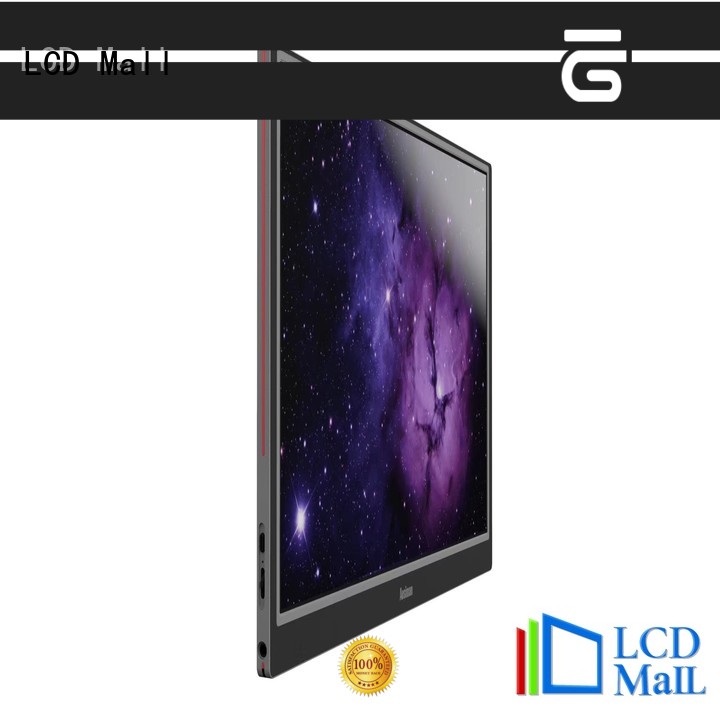
LMM52001: A New 52-Inch Square Digital Signage Display Designed for Maximum Visual Impact2026/09/04 – LCD Mall Limited has announced the launch of the LMM52001, a 52-inch square digital signage display engineered to deliver striking visual communication in retail, corporate, hospitality, and cultural environments. Combining a generous 1:1 square canvas, ultra-sharp 1900x1900 resolution, and integrated Android processing, the LMM52001 offers businesses a powerful standalone solution for immersive brand storytelling.Square Format Meets Large-Scale DisplayThe LMM52001 breaks away from traditional rectangular displays with its 52-inch square form factor, creating a balanced, contemporary aesthetic that naturally draws the viewer's attention. The 1900x1900 resolution ensures exceptional clarity and detail, making it ideal for high-end product showcases, digital art installations, creative video walls, and dynamic messaging in high-traffic commercial spaces.The display achieves 500cd/m² brightness, delivering vivid, readable content even in brightly lit indoor environments such as storefronts, sunlit atriums, and open-plan lobbies.Powerful Standalone PerformanceAt the core of the LMM52001 is the RK3288 quad-core processor, running at 1.8GHz, paired with the Android 5.1.1 operating system. This integrated architecture eliminates the need for external media players or computers, reducing hardware costs and simplifying installation. The system supports smooth full-HD video playback, responsive touch interaction (where applicable), and reliable 24/7 operation.Comprehensive connectivity options, including HDMI, USB, and RJ45 Ethernet, provide flexible content management and seamless integration into existing digital signage networks.Engineered for Commercial EnvironmentsBuilt with a durable metal enclosure and tempered glass protection, the LMM52001 is designed for continuous operation in demanding public and commercial settings. With a panel life exceeding 60,000 hours, the display offers long-term reliability and low total cost of ownership.The square aspect ratio also makes the LMM52001 particularly well-suited for multi-panel video wall configurations, enabling creative grid layouts that deliver immersive visual experiences in event spaces, museums, and entertainment venues.Applications Across IndustriesThe LMM52001 is versatile enough to serve a wide range of applications:Retail: Eye-catching product showcases, social media walls, and promotional displaysCorporate: Lobby welcome screens, internal communications, and real-time data dashboardsHospitality: Digital menu boards, event schedules, and ambient art displaysMuseums & Galleries: High-resolution exhibit presentations and digital art installationsVideo Walls: Scalable multi-display configurations for large-scale visual impactAvailabilityThe LMM52001 is available for order immediately. For pricing, customization options, or to request a demonstration, please contact [Company Name] at [contact email/phone] or visit [website URL].About [Company Name][Company Name] is a leading provider of innovative digital signage solutions, specializing in high-performance commercial displays for retail, corporate, hospitality, and public spaces. With a commitment to quality, reliability, and cutting-edge design, [Company Name] helps businesses around the world transform their visual communication strategies.Media Contact:LCD Mall Limited Professional LCD and Touch Manufacturer/SolutionAdd: Room 405-406, 4B Building, Yunli Tech Park, Jihua Street, Longgang District, Shenzhen 518112 E-mail: Felix@LCD-Mall.com & Sales@AllTouchDisplay.com Whatsapp/Wechat/Mob: 86-13713689582 Skype: felix998 Tel: 86-755-82338789 www.AllTouchDisplay.com www.LCD-Mall.com LCD Mall, More than LCD!
Read More>>
Hot products
Relevant Articles
A New 52-Inch Square Digital Signage Display Designed for Maximum Visual Impact
LMT064FK002U – Bringing 6.4-Inch 4K Clarity to the Era of High-Brightness, High-Resolution Displays
The Display Industry's 4K ImperativeAs industries from surgical robotics to connected aviation push for ever-greater visual fidelity, the underlying display technology is being asked to do more: deliver 4K resolution in compact footprints, maintain legibility in high-ambient-light conditions, and support high-speed data transmission with minimal system complexity. The LMT064FK002U answers that call with a combination of specifications that places it at the intersection of several major display trends.6.4 Inches of 4K UHD, Packed into a Compact ModuleThe LMT064FK002U is a 6.4-inch IPS TFT LCD module delivering 3840x2160 (4K UHD) resolution, offering an exceptionally high pixel density suitable for applications where detail fidelity is non-negotiable. This brings 4K imaging capability to compact device footprints traditionally limited to lower resolutions, enabling clearer data visualization, more precise medical imaging, and improved situational awareness in industrial and avionics settings.Recent industry developments highlight the growing demand for such capabilities. At the 2026 Farnborough Airshow, ZEISS introduced holographic cockpit display concepts, projecting that next-generation aircraft will require compact, high-brightness, high-resolution displays to consolidate increasingly complex flight data into intuitive visual environments. Meanwhile, Canvys has expanded its 4K medical display platform, acknowledging that OEMs across surgical and diagnostic applications require scalable, high-resolution solutions that maintain image accuracy. The LMT064FK002U's compact 6.4-inch form factor addresses this need for scalable 4K platforms across multiple display sizes.2200 cd/m²: Sunlight Readability as a BaselineThe display's brightness of 2200 cd/m² is a key differentiator in outdoor and high-ambient-light applications. Industry benchmarks suggest that standard indoor displays range between 250–350 nits (cd/m²), while outdoor applications typically require 800–1000 nits minimum for adequate sunlight readability. At 2200 cd/m², the LMT064FK002U is engineered for direct sunlight visibility, making it suitable for outdoor kiosks, marine navigation, rugged handheld instruments, and avionics.This focus on high brightness aligns with broader industry trends. Gold Fame Technology's RGBW LCD series, for instance, emphasizes outdoor optimization, offering brightness up to 1200 cd/m² while noting that minimizing heat generation and power consumption is critical for prolonged outdoor operation. The LMT064FK002U's 2200 cd/m² specification sits at the high end of this spectrum, indicating a design built for extreme lighting environments. EIZO's recently launched CuratOR EX3245H surgical monitor, equipped with Mini LED backlighting, achieves 1900 cd/m² peak brightness for operating theatre applications.IPS Technology and MIPI Interface: Performance and IntegrationThe module's IPS technology ensures consistent color reproduction across wide viewing angles—a critical requirement in medical and avionics contexts where displays are viewed from multiple positions. This aligns with recommendations for outdoor and multi-user applications, where IPS panels outperform TN alternatives in maintaining brightness and color fidelity across angles.The MIPI DSI interface is equally important. As 4K UHD resolution demands high data transmission bandwidth, MIPI interfaces have become the standard for enabling high-speed serial communication with reduced pin counts and improved EMI performance. Industry sources note that MIPI DSI with VESA Display Stream Compression (DSC) can extend bandwidth up to 30 Gbps for 4K displays, supporting refresh rates of 60Hz and beyond. For the LMT064FK002U, the MIPI interface simplifies integration into application processors and system-on-chip designs, reducing signal complexity in compact device layouts.Applications at the Intersection of Key TrendsThe LMT064FK002U is positioned to serve markets where the convergence of 4K resolution, high brightness, and compact form factor is increasingly valued:Medical Imaging: 4K UHD resolution supports detailed visualization of anatomical structures in endoscopic and surgical displays, where clarity is directly tied to patient outcomes.Avionics and Cockpit Displays: As the aviation industry consolidates flight data into more integrated display systems, compact 4K panels with sunlight-readable brightness are gaining traction.Outdoor Industrial Equipment: High brightness ensures legibility in direct sunlight for kiosks, EV charging stations, and field instrumentation.High-End Handheld Instruments: The 6.4-inch size offers a balance between screen real estate and portability for industrial and scientific measurement devices.ConclusionThe LMT064FK002U arrives at a moment when display technology is being called upon to deliver more: higher resolution, higher brightness, and better integration—all in smaller packages. Its 2200 cd/m² brightness and 4K UHD resolution in a 6.4-inch IPS panel align with the needs of OEMs developing next-generation medical, aviation, and industrial products. As industry players push for displays that perform reliably across diverse environmental conditions, the LMT064FK002U demonstrates what's achievable when high-brightness and 4K capabilities are built into a compact, MIPI-enabled module.
Read More>>
Brightening the Smart Home Experience – LMM055002 Sets New Standards for Embedded Displays
The smart home industry continues to evolve at a rapid pace, with display technology playing an increasingly central role in how users interact with their connected environments. As wall-mounted control panels, smart mirrors, and IoT dashboards become household staples, the demand for displays that combine visual excellence with seamless integration has never been higher .Enter the LMM055002 – a 5.5-inch capacitive touch display engineered specifically for smart home applications, featuring Full HD 1920x1080 resolution and an industry-leading 2000 cd/m² brightness that redefines what users can expect from embedded smart home interfaces.A Display That Outshines the CompetitionOne of the most persistent challenges in smart home display design is maintaining visibility across widely varying lighting conditions – from dim nighttime bedroom settings to bright daylight streaming through living room windows. While industry standards typically range from 300 to 950 nits for embedded displays, the LMM055002’s 2000 cd/m² brightness ensures sunlight readability that competitors struggle to match .This level of brightness, paired with Full HD resolution, positions the LMM055002 alongside premium display innovations recently showcased at major technology events, where ultra-high brightness has emerged as a key differentiator in consumer display technology . Just as LG Display’s OLED panels have pushed brightness boundaries to 4,500 nits for television applications, the LMM055002 brings this same visual philosophy to the embedded display space .Designed for the Modern Smart HomeThe LMM055002 is purpose-built for applications where visual clarity meets elegant design. Its projected capacitive touchscreen with 6H hardened glass delivers responsive, intuitive interaction – essential for smart home control panels, interactive art displays, and IoT dashboards.Key applications include:Wall-mounted home automation hubs for lighting, climate, security, and entertainment controlSmart mirror integrations, where displays sit behind two-way mirrors for weather, calendar, and news updatesPersonalized digital assistants with rich visual feedbackSmart audio system companions displaying playlists and album artInteractive art and photo frames as high-brightness digital galleriesKitchen and bedside terminals for recipes, briefings, and family communicationsThe display’s sleek, minimalistic front design with narrow bezels ensures it blends seamlessly into modern interiors – as aesthetically pleasing when powered off as when actively controlling the home.Plug-and-Play Integration for Makers and DevelopersCompatibility is crucial for embedded applications, and the LMM055002 delivers through standard HDMI video input and USB-HID touch protocol. It works out-of-the-box with Raspberry Pi 4/3/2/1/B/A+, Windows, Ubuntu, Android, and macOS – requiring no driver installation for major operating systems.Onboard M2.5 mounting threads simplify secure wall mounting or enclosure embedding, while the included Raspberry Pi adapter kit and screw set accelerate development and deployment.Meeting Rising Industry StandardsThe smart home display market is evolving toward higher brightness, better touch responsiveness, and more refined industrial design . The LMM055002 directly addresses these trends:FeatureLMM055002Industry Benchmark Brightness2000 cd/m²300-950 cd/m²ResolutionFull HD (1920x1080)VariesTouch TechnologyPCAP, 6H HardnessPCAP standardIntegrationHDMI + USB-HIDProprietary often requiredSetting a New BenchmarkThe LMM055002 demonstrates that high-performance embedded displays need not sacrifice ease of use for visual excellence. By delivering 2000 cd/m² brightness – significantly exceeding standard industrial display brightness levels – it ensures smart home interfaces remain visible and engaging in any lighting condition, from dim nighttime environments to bright daylight.For smart home integrators, product developers, and DIY enthusiasts, the LMM055002 represents a display solution engineered to accelerate product development while exceeding user expectations for visual quality, responsiveness, and design elegance.About the LMM055002 Display SeriesThe LMM055002 is part of a professional-grade display family designed for smart embedded applications. For more information about the LMM055002 and other display solutions, visit our product page or contact our technical sales team.Media Contact:LCD Mall Limited Marketing Departmentinfo@alltouchdisplay.com
Read More>>
LMR050WVDCV10 – A Feature-Packed 5-Inch Capacitive Touch Display Module for Raspberry Pi
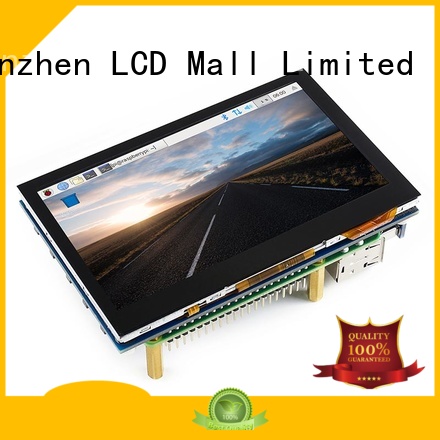
LMR050WVDCV10 – A Feature-Packed 5-Inch Capacitive Touch Display Module for Raspberry PiThe LMR050WVDCV10 is a 5-inch LCD display module specifically designed for Raspberry Pi and general-purpose computing devices. Featuring an 800×480 hardware resolution and a responsive capacitive touchscreen, this module delivers excellent visual quality and intuitive interaction for both embedded projects and everyday applications.One of the standout features of this module is its broad compatibility. It supports video input via both HDMI and VGA interfaces, allowing seamless connection to mainstream single-board computers such as Raspberry Pi and NVIDIA Jetson Nano, as well as standard Windows PCs. Notably, the touch functionality is driver-free on most major operating systems, enabling true plug-and-play operation.In terms of power and audio, the LMR050WVDCV10 is thoughtfully designed. It utilizes a microUSB interface for combined power supply and touch signal transmission, with a reserved backup power port to address potential USB power insufficiency. The onboard 3.5mm audio jack supports HDMI audio output, making it convenient for users to connect headphones or external speakers.Additionally, the physical buttons on the side of the module provide easy OSD (On-Screen Display) menu adjustments, allowing users to fine-tune brightness, contrast, color, and other display parameters, with support for multiple languages. Whether you are a DIY enthusiast, an industrial equipment developer, or simply looking to expand your desktop display setup, the LMR050WVDCV10 is an ideal choice that combines flexibility, practicality, and performance.
Read More>>