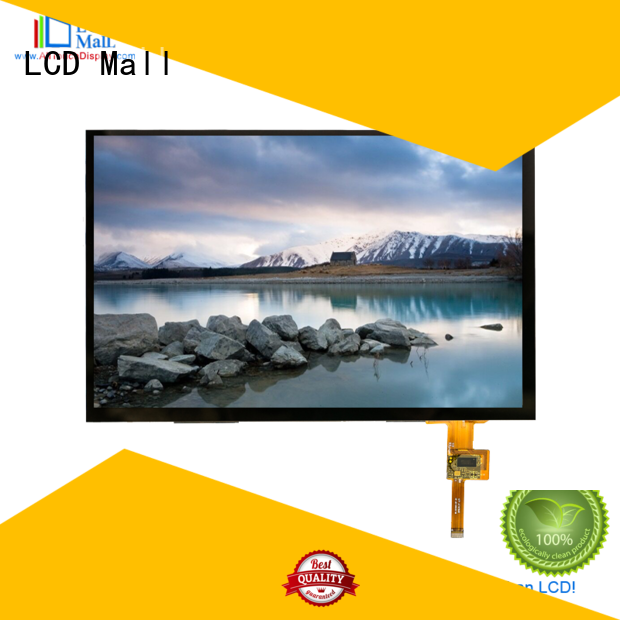
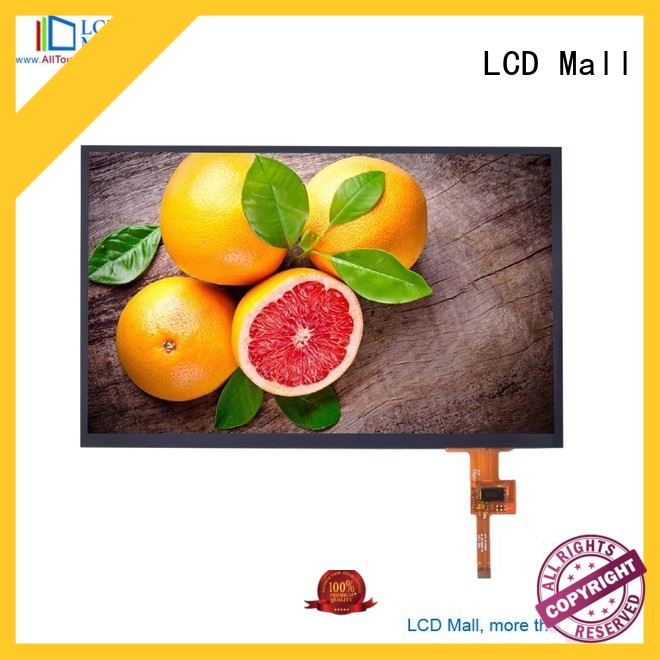
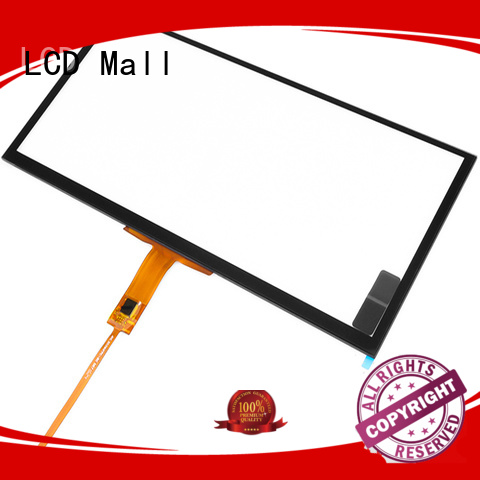
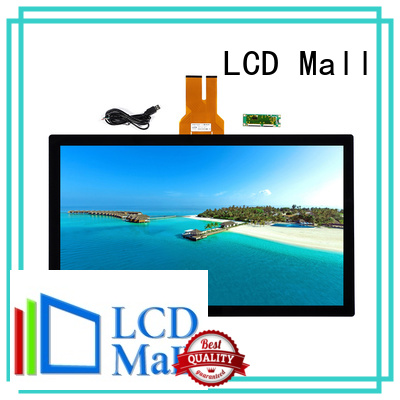
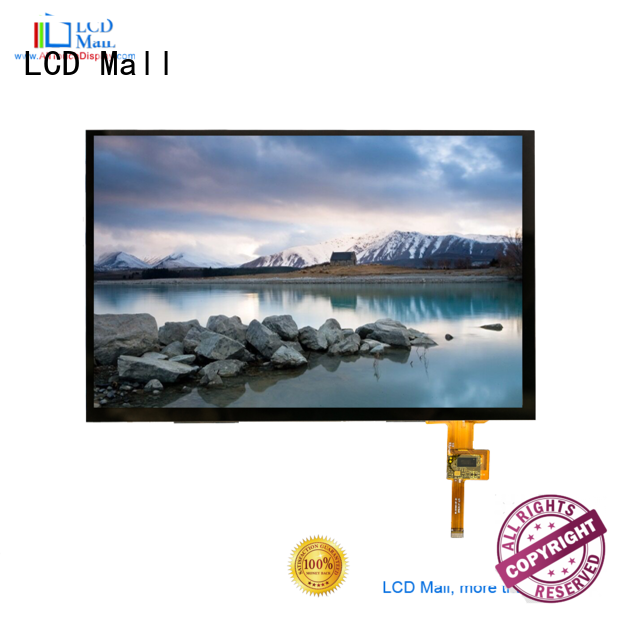
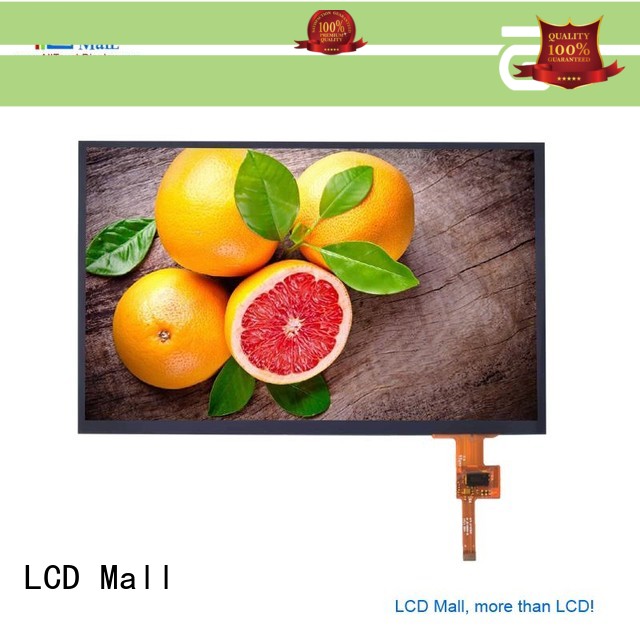
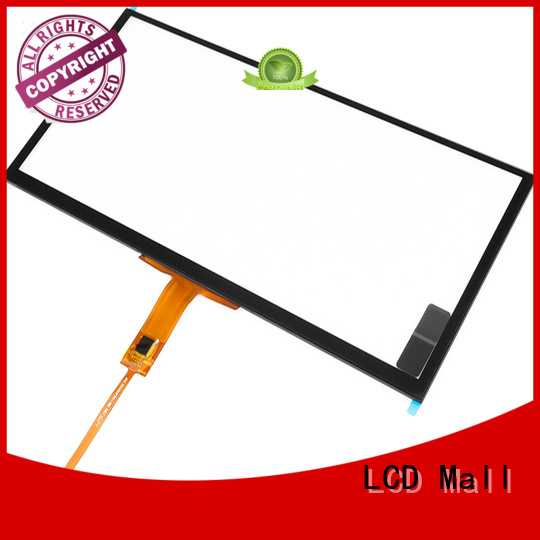
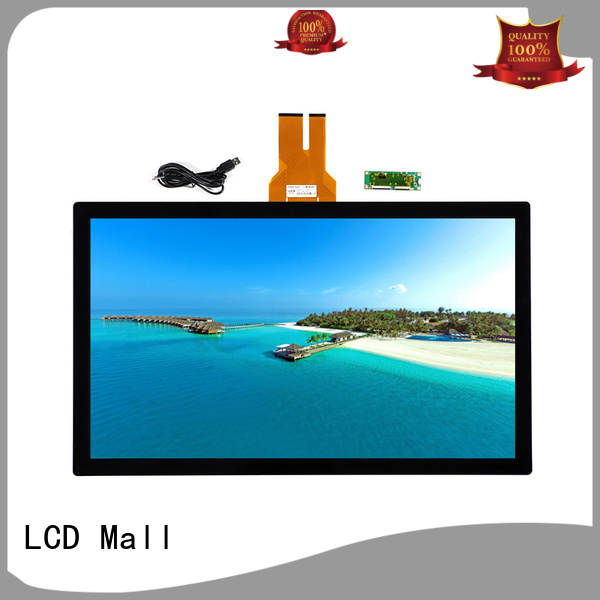
The smart home industry continues to evolve at a rapid pace, with display technology playing an increasingly central role in how users interact with their connected environments. As wall-mounted control panels, smart mirrors, and IoT dashboards become household staples, the demand for displays that combine visual excellence with seamless integration has never been higher .Enter the LMM055002 – a 5.5-inch capacitive touch display engineered specifically for smart home applications, featuring Full HD 1920x1080 resolution and an industry-leading 2000 cd/m² brightness that redefines what users can expect from embedded smart home interfaces.A Display That Outshines the CompetitionOne of the most persistent challenges in smart home display design is maintaining visibility across widely varying lighting conditions – from dim nighttime bedroom settings to bright daylight streaming through living room windows. While industry standards typically range from 300 to 950 nits for embedded displays, the LMM055002’s 2000 cd/m² brightness ensures sunlight readability that competitors struggle to match .This level of brightness, paired with Full HD resolution, positions the LMM055002 alongside premium display innovations recently showcased at major technology events, where ultra-high brightness has emerged as a key differentiator in consumer display technology . Just as LG Display’s OLED panels have pushed brightness boundaries to 4,500 nits for television applications, the LMM055002 brings this same visual philosophy to the embedded display space .Designed for the Modern Smart HomeThe LMM055002 is purpose-built for applications where visual clarity meets elegant design. Its projected capacitive touchscreen with 6H hardened glass delivers responsive, intuitive interaction – essential for smart home control panels, interactive art displays, and IoT dashboards.Key applications include:Wall-mounted home automation hubs for lighting, climate, security, and entertainment controlSmart mirror integrations, where displays sit behind two-way mirrors for weather, calendar, and news updatesPersonalized digital assistants with rich visual feedbackSmart audio system companions displaying playlists and album artInteractive art and photo frames as high-brightness digital galleriesKitchen and bedside terminals for recipes, briefings, and family communicationsThe display’s sleek, minimalistic front design with narrow bezels ensures it blends seamlessly into modern interiors – as aesthetically pleasing when powered off as when actively controlling the home.Plug-and-Play Integration for Makers and DevelopersCompatibility is crucial for embedded applications, and the LMM055002 delivers through standard HDMI video input and USB-HID touch protocol. It works out-of-the-box with Raspberry Pi 4/3/2/1/B/A+, Windows, Ubuntu, Android, and macOS – requiring no driver installation for major operating systems.Onboard M2.5 mounting threads simplify secure wall mounting or enclosure embedding, while the included Raspberry Pi adapter kit and screw set accelerate development and deployment.Meeting Rising Industry StandardsThe smart home display market is evolving toward higher brightness, better touch responsiveness, and more refined industrial design . The LMM055002 directly addresses these trends:FeatureLMM055002Industry Benchmark Brightness2000 cd/m²300-950 cd/m²ResolutionFull HD (1920x1080)VariesTouch TechnologyPCAP, 6H HardnessPCAP standardIntegrationHDMI + USB-HIDProprietary often requiredSetting a New BenchmarkThe LMM055002 demonstrates that high-performance embedded displays need not sacrifice ease of use for visual excellence. By delivering 2000 cd/m² brightness – significantly exceeding standard industrial display brightness levels – it ensures smart home interfaces remain visible and engaging in any lighting condition, from dim nighttime environments to bright daylight.For smart home integrators, product developers, and DIY enthusiasts, the LMM055002 represents a display solution engineered to accelerate product development while exceeding user expectations for visual quality, responsiveness, and design elegance.About the LMM055002 Display SeriesThe LMM055002 is part of a professional-grade display family designed for smart embedded applications. For more information about the LMM055002 and other display solutions, visit our product page or contact our technical sales team.Media Contact:LCD Mall Limited Marketing Departmentinfo@alltouchdisplay.com
Read More>>
Hot products
Relevant Articles
Brightening the Smart Home Experience – LMM055002 Sets New Standards for Embedded Displays
LMR050WVDCV10 – A Feature-Packed 5-Inch Capacitive Touch Display Module for Raspberry Pi
LMR050WVDCV10 – A Feature-Packed 5-Inch Capacitive Touch Display Module for Raspberry PiThe LMR050WVDCV10 is a 5-inch LCD display module specifically designed for Raspberry Pi and general-purpose computing devices. Featuring an 800×480 hardware resolution and a responsive capacitive touchscreen, this module delivers excellent visual quality and intuitive interaction for both embedded projects and everyday applications.One of the standout features of this module is its broad compatibility. It supports video input via both HDMI and VGA interfaces, allowing seamless connection to mainstream single-board computers such as Raspberry Pi and NVIDIA Jetson Nano, as well as standard Windows PCs. Notably, the touch functionality is driver-free on most major operating systems, enabling true plug-and-play operation.In terms of power and audio, the LMR050WVDCV10 is thoughtfully designed. It utilizes a microUSB interface for combined power supply and touch signal transmission, with a reserved backup power port to address potential USB power insufficiency. The onboard 3.5mm audio jack supports HDMI audio output, making it convenient for users to connect headphones or external speakers.Additionally, the physical buttons on the side of the module provide easy OSD (On-Screen Display) menu adjustments, allowing users to fine-tune brightness, contrast, color, and other display parameters, with support for multiple languages. Whether you are a DIY enthusiast, an industrial equipment developer, or simply looking to expand your desktop display setup, the LMR050WVDCV10 is an ideal choice that combines flexibility, practicality, and performance.
Read More>>
LMM185005: The 18.5" FHD Industrial Touch Monitor That Redefines Clarity and Versatility
LCD Mall today announced the launch of the LMM185005, a new 18.5-inch industrial-grade touch monitor that combines Full HD 1080p resolution, an IPS panel with ultra-wide viewing angles, and a highly responsive 10-point capacitive touchscreen – all within a compact, energy-efficient chassis designed for round-the-clock commercial and industrial use.As industries increasingly demand displays that deliver both visual precision and durable touch interaction, the LMM185005 steps in as a versatile solution for applications ranging from retail kiosks and digital signage to factory automation, medical workstations, and self-service terminals.Crystal-Clear Imaging with IPS ExcellenceAt the heart of the LMM185005 is an 18.5-inch IPS (In-Plane Switching) panel with a native 1920 × 1080 Full HD resolution. Unlike conventional TN panels, IPS technology ensures consistent colour accuracy and image quality across all viewing angles – with the LMM185005 delivering an impressive 89°/89°/89°/89° viewing range (CR≥10).With support for 16.7 million colours and 72% NTSC colour gamut, the display produces vibrant, lifelike visuals that make it suitable for content-rich applications, including menu boards, interactive maps, and data dashboards.Brightness That Adapts to Any EnvironmentThe LMM185005 comes with a standard 300 cd/m² brightness, ensuring good readability in typical indoor environments. For customers operating in high-ambient-light conditions – such as outdoor kiosks, sunlit storefronts, or factory floors – the display is customisable up to 1,500 cd/m², providing exceptional sunlight readability without compromising colour integrity.This flexibility makes the LMM185005 a future-proof investment for system integrators and OEMs who require a single display platform adaptable to varying deployment scenarios.Precision Touch, Built to LastEquipped with a G+G (Glass-Glass) capacitive touchscreen, the LMM185005 supports 10 simultaneous touch points, enabling intuitive multi-finger gestures such as pinch, zoom, and swipe. The touch layer offers:>86% light transmittance for clear, undistorted visuals≥6H surface hardness to resist scratches and daily wear>50 million touch actuations rated lifespan, ensuring long-term reliability in high-traffic environmentsThe capacitive technology delivers fast, drift-free, and accurate touch response, eliminating the need for recalibration – a critical advantage for mission-critical interfaces.Seamless Connectivity for Modern SystemsConnectivity is straightforward and comprehensive. The LMM185005 features:1 × HDMI 2.0 – for high-definition video input1 × VGA – for legacy system compatibility1 × USB 2.0 – for touch data transmission1 × Audio jack – for audio output1 × DC 5.5×2.1 power socket – for stable power deliveryThis interface suite ensures the monitor can be integrated with Windows PCs, Raspberry Pi, Android devices, and Linux-based systems with minimal setup effort, making it a developer-friendly choice for both prototyping and volume deployment.Flexible Installation, Rugged ReliabilityDesigned with real-world installation challenges in mind, the LMM185005 supports three mounting options – wall-mounted, embedded, and ear-mounted – offering maximum flexibility for space-constrained or custom-built enclosures.Operational reliability is guaranteed across a wide temperature range:Operating temperature: 0°C to 50°CStorage temperature: –20°C to 60°CWith total power consumption under 32W, the monitor delivers strong performance while keeping energy costs and heat generation to a minimum – an important consideration for 24/7 deployments.Pricing, Availability, and CustomisationThe LMM185005 is available now for order through LLCD Mall's official website and authorised distribution partners. Volume pricing, custom brightness configurations (up to 1500 cd/m²), and tailored mounting solutions are available upon request for enterprise and OEM customers.For technical datasheets, sample requests, or bulk enquiries, please visit [Manufacturer of LCD Display, Touchscreen, LCD Screen | LCD Mall] or contact the LCD Mall sales team at [info@alltouchdisplay.com] .About LCD MallLLCD Mall is a leading provider of industrial display solutions, specialising in high-performance touch monitors and custom display systems for commercial, industrial, and embedded applications. With a commitment to quality, innovation, and customer-centric design, LCD Mall empowers businesses worldwide to build smarter, more reliable human-machine interfaces.
Read More>>
LMH0700FHNNV10 – 7.0" AMOLED Display Module Now Available
Premium Visual PerformanceThe LMH0700FHNNV10 delivers a crisp 1080×1920 (FHD+) resolution with 315 PPI pixel density, ensuring sharp text, detailed imagery, and vibrant color reproduction. With a typical brightness of 800 cd/m², the display maintains excellent visibility even in bright ambient light conditions, making it suitable for both indoor and outdoor applications.The AMOLED panel technology offers deep blacks, high contrast ratios, and a wide color gamut, providing superior image quality compared to conventional LCD solutions. The LTPS (Low-Temperature Polycrystalline Silicon) backplane technology enables high pixel density and fast response times.Flexible Integration OptionsEquipped with a MIPI 4-Lane interface, the LMH0700FHNNV10 ensures seamless connectivity with modern application processors and system-on-chip platforms. The module comes with a pre-integrated driver board that significantly reduces development complexity and accelerates prototyping cycles.The display supports flexible orientation options:Portrait mode: Up to 120Hz refresh rate for smooth animationsLandscape mode: 60Hz refresh rate for video playback and UI applicationsBuilt for Demanding EnvironmentsThe LMH0700FHNNV10 is engineered to perform reliably across a wide temperature range. With -30°C to +80°C operating and storage temperature tolerance, the module is suitable for industrial, automotive, and outdoor applications where temperature fluctuations are a concern.The module features an ultra-slim profile with dimensions of 89.13 × 160.91 × 1.095 mm and an active area of 87.13 × 154.91 mm, making it ideal for space-constrained designs.Key Specifications at a GlanceParameterSpecificationScreen Size7.0 inchResolution1080 × 1920 (FHD+)Display TechnologyAMOLED / LTPSBrightness800 cd/m² (typical)InterfaceMIPI 4-LaneDriver ICVTDR6130Color Depth68.7B colors (12-bit)Refresh Rate120Hz (portrait) / 60Hz (landscape)Operating Temperature-30°C ~ +80°CStorage Temperature-30°C ~ +80°CModule Dimensions89.13 × 160.91 × 1.095 mmActive Area87.13 × 154.91 mmConnectorFH26-39S-0.3SHWApplicationsThe LMH0700FHNNV10 is designed for a wide range of applications, including:Industrial Human-Machine Interfaces (HMI)Portable monitors and handheld devicesSmart home control panelsAutomotive instrument clusters and infotainmentMedical equipment displaysHigh-end consumer electronicsAvailabilitySamples of the LMH0700FHNNV10 are available upon request. The module includes the driver board and supports rapid prototyping for production-ready designs. For datasheets, technical support, and ordering information, please contact our sales team.For media inquiries or additional information, please contact:[Contact Information]
Read More>>